Simply Sweet Home

Recipes, Decor, Crafts, Product Reviews, Giveaways and more.

Tuesday, August 24, 2010

Walmart Box Tops for Education Giveaway

Looking for a way to donate to your child's school?  The Box Tops for Education program is an easy solution and this year Walmart is making it even easier! From Aug. 3 - Aug. 31, head over to your local Walmart to find 4 Box Tops on participating General Mills products and earn more cash for the participating school of your choice. As your one-stop destination for all your needs this back-to-school season, Walmart is helping you save more and earn more with the Box Tops for Education brands you love.

With over 20 great brands and more than 40 products participating, here are just a few favorites that include 4 Box Tops that you can find at Walmart this August: Cinnamon Toast Crunch cereal, Pillsbury Toaster Strudel pastries, Trix Yogurt, Hamburger Helper skillet meals, Totino’s Pizza Rolls snacks, Nature Valley Granola Bars and Betty Crocker Fruit Roll-Ups snacks. Be sure to keep an eye out for Box Tops on great products from Kleenex, Ziploc, and Hefty too!


Win It! To help you to purchase General Mills products and earn cash for your schools, Wal-Mart, General Mills, and MyBlogSpark are offering one of you a $25 Wal-Mart giftcard.

Giveaway Closed. Congrats to Adriane (LAMusing).


-Jerri


Disclosure: Information and giftcards are provided by General Mills and Wal-Mart through MyBlogSpark. For hosting this giveaway, I received a $25 Wal-Mart giftcard.

Labels: , , ,

Friday, July 2, 2010

Making Your Own U.S. History Resource Books


My husband and I often talk about the idea of homeschooling our children.  And at the very least, we will definitely be supplementing their education at home.  I know a lot of my readers are home school moms, and I know even more of you who are not homeschool moms like to have learning activities for your kids.

So with 4th of July upon us, I decided to share one of my ideas for part of a U.S. history curriculum.  As a history major myself, I believe the best way to teach our kids about U.S. history and government is to go to the original documents and sources, so we can draw our own conclusions.  However, we may not always have these immediately at our finger tips.  And if you're on a budget it may be difficult to buy all the books and materials you'd like, so one of my ideas is to create a History Resource Book.

Essentially you'll just need a 3-ring binder, and you will fill it with the documents and resources that you'd like to have on hand to share with your kids.  Documents to have in your book include copies of the Declaration of Independence and the U.S. Constitution.  I'd also include a list of the presidents, states & capitals, a timeline of events, and basic facts about the government and how it's structured.  It could also include a copy of the Articles of Confederation and a copy of The Federalist Papers, especially if you're doing a close study of American colonial history.

To get you started on making your History Resource Book, I've looked up these documents for you, as well as some other pages which may be helpful to you.

Historical Timeline  - While I don't emphasize the memorization of dates, I always find it helpful to have a general timeline for reference purposes and in order to keep track of when events happen in relationship to other events.  Here's a comprehensive timeline of United States history, from the original landing at Roanoke up to the 2009 inauguration.  This is also a good list for general historical topics of study.

Declaration of Independence - Full text. And resource links.

Articles of Confederation - Full text of our first constitution.

United States Constitution - Full text of the Constitution, including Ammendments, signers, important dates, notes, and sources.

The Federalist Papers - Full text of The Federalist Papers, a series of 85 articles/essays advocating the ratification of the United States Constitution.

Presidents of the United States - I've always found it curious that I never had to memorize the Presidents in school.  This site not only has a list of the Presidents and the years of the term(s) in office, but each President has his own page of facts, including their homestate, religion, party, election results, cabinet secretaries, major events, and interesting facts. (I think it would be great to go down the list and teach about one president each week, and these facts would give you a good foundation to start and be a good quick reference for the kids to refer to.)

Government 101 - About.com and wikipedia may not be legitimate sources for your college papers, but I usually find them helpful when I need to look up some basic facts or background on a subject.  This page breaks down the three branches of government for you, and there's also a section on Federalism and our historic documents.

50States.com List of all the 50 states. You can also look up all the state flags, birds, flowers, and seals. They also have all the state governors, famous people, statistics on the states, state mottos, attraction, and more.  (It could be fun to look up all the information on your homestate and share it with your child. Also, I think kid's might enjoy looking at all the flags, or even reading the state mottos.)

USA Flag - This site teaches about the history of the flag and also rules of etiquette regarding the flag.  And there's also lyrics to some patriotic songs and some links to other resources.

Other Sources:
USA.gov Government Made Easy - All the basic information on the current agencies of government and our current offcials, including biographical and contact information. There's a list of all the current Executive Departments/Cabinets (definitely worth learning!).  And there's even an A-Z index of all the U.S. Departments and Agencies with links to all their websites (probably not worth printing because there are so many---but definitely a must see, just to give you an idea of how big the government really is).

I recommend the following two books as secondary sources: One is a history of the United States, and the other is about the Founders and the 28 Principles of Freedom, upon which the country was founded.


-Jerri

Labels: , ,

Thursday, July 1, 2010

Links To Kid's 4th of July Activities


If you're looking for some fun activities and learning exercises to help teach your kid's about the 4th of July and/or the history of the United States, this post is for you.  This short list of links will provide you with all the worksheets, printables, project ideas, and learning activities you need for your kids of all ages.

Also, check back in a couple of days, because I'll be posting some links to resources for older kids and more advanced studies!

Conversation Jar at Just Sew Sassy - One of our blog friends and Friday Favorites participants, Staci, linked up this great post last week.  It gives you a tutorial on how to make a conversation jar, to teach your kids about our history and patriotic holidays.

Apples for the teacher has a lot of coloring sheets, worksheets, printables, craft projects, a reading list of kid's books, and other great stuff for 4th of July.

Kaboose also has some 4th of July printables for you.

Family Fun has a ton of 4th of July crafts, recipes, and printables.

Activity Village has compiled together a lot of information, quizzes, activity sheets, crafts, etc.

Primary Games had a few color sheets that I thought were cute.

Brighthub has a user article that gives some ideas for lesson plans for preschool children.

Twiggle Magazine has some 4th of July recipes and snacks to make with the kids.

-Jerri

Labels: , ,

Monday, June 28, 2010

4th of July Flag Treats


I just love new spins on old favorites!  I found these 4th of July Flag Treats on Class Brain.  Wouldn't these be great to serve to the kids this weekend?  The Class Brain site also has other activities, worksheets, etc for the 4th.

Here's a list of what you'll need and the instructions to to make the treats.

What you’ll need:
Crispy rice treats
Airheads® Cherry bars
Airheads® White Mystery bars
Airheads® Blue Raspberry bars
Small kitchen knife or scissors
Small star-shaped cookie cutter (optional)

Directions:
Cut crispy rice treats into rectangles. Cut part of an Airheads® Blue Raspberry bar to make the upper blue corner of the flag. Cut alternating strips of Airheads® Cherry and White Mystery to make the flag’s stripes. Arrange pieces on crispy rice treat. Trim to fit. Using either a star-shaped cookie cutter, or by hand, cut out a star shape from an Airheads® White Mystery bar. Place star on the blue square. And you're done!


-Jerri
----------------------------
I'm posting a link to this post at:
It’s So Very Creative & It's So Very Thrifty hosted by It’s So Very Cheri
Make it for Monday hosted by Cottage Instincts
Made it Mondays hosted by The Persimmon Perch
Making the World Cuter Monday hosted by Making the World Cuter
Make Your Monday hosted by Twice Remembered
Metamorphosis Monday hosted by Between Naps on the Porch
DIY Day at A Soft Place to Land
Market Yourself Monday is hosted by Sumos Sweet Stuff
Marketing Mondays and Sharing Ideas Wednesday is hosted by The Trendy Treehouse
What Your Working with Wednesday is hosted by Me and My Bucket
Show & Tell Wednesday is hosted by Blue Cricket Design
Tip Me Tuesday is hosted by Tip Junkie
Week End Review is hosted by Tator Tots & Jello
Star on Saturday is hosted by Craft-Werk
Penny Pinching Party is hosted by The Thrifty Home
Show & Tell Friday is hosted by Romantic Home
Tidy Mom

Labels: , ,

Tuesday, June 8, 2010

Venus Ribbon Review/Giveaway


Here's another fun giveaway for all you crafty chicks! Venus Ribbon offers a variety of fashionable ribbons for all your crafting projects.  Their stock includes ribbons of all colors, patterns, styles, and motifs.  These include polka dots, stripes, animal prints, sports themes, patriotic, checkered, plaid, solid colors, and more!  If you're thinking ahead for the holidays, they even have ribbons for Christmas, Halloween, and Valentines.


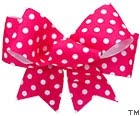
I received a 10 yard spool of ribbon in the pattern of my choice.  I chose the reversible hot pink and white polka dot ribbon.  I was impressed with the quality of the fabric and its vibrant colors. I plan to use this ribbon on at least one fashion project, which will be a pair of flip flops.  And I'll also be using this for other craft projects and possibly for some fancy gift ribbons.

I would definitely recommend this ribbon to anyone who makes hairbows or likes to add ribbons and bows to children's fashions.  It would also be ideal for home decor and craft projects or your homemade gifts.  Here are just a few of the fun patterns available.  Be sure to check out Venus Ribbon for more cute and colorful ribbons for your projects!


One of my readers will win a 10 yrd spool of ribbon in their favorite style.  To enter, please visit Venus Ribbon  and leave a comment on this post with your favorite pattern and what you would make with the ribbon.


Giveaway Closed. Winner: Birdie of Birdie Says.


-Jerri


Full Disclosure:  I was no paid for this post. For hosting this giveaway, I received a free spool of ribbon.  The giveaway prize is provided by Venus Ribbon. The opinions here are mine.

Labels: , , , ,

Tuesday, June 1, 2010

Yoohoo & Friends Feature & Giveaway

I am pleased to introduce you to Aurora's Yoohoo & Friends!  This adorable children's program and line of plush toys are based on animals from around the world, many of which are endangered. 

Yoohoo & Friends have a new interactive world on the web.   At the website, visitors can learn about the many animals that Yoohoo & Friends are based on, as well as play games, send e-cards, download wallpapers, calendars and coloring sheets.  They can also adopt and raise YooHoo & Friends.  It requires no activation code and is targeted to children 5 to 12 years old.


Currently there are over 100 different items in the Yoohoo & Friends line.  You can buy their plush toys, keychains, and more online at http://shop.auroragift.com/ or you can check to see if they are available in your area.  And as you can see below, they even have graduation Yoohoos!


I received 2 Yoohoo & Friends toys:  Lora the Scarlet Macaw and Shooga the Sugar Glider.  These little guys are just adorable!  They are very soft and feature bright colors, big tales, and big, bright eyes! And they make cute noises.  Oddly enough, both the cartoon and the toys themselves remind me of Shirt Tales from the 80's.  (Love them!) These toys are sure to be loved by children and collector's alike!

One Simply Sweet Home reader will win a 5 inch plush Yoohoo & Friends Toy that makes a noise when you squeeze it. 


Giveaway Closed.  Congrats to our winner, Candice of Penny Pinching Pixie!

Disclosure: Product samples and giveaway prizes are provided by Aurora.  The opinions expressed here are my own.  If you'd like to have your product featured on Simply Sweet Home, please see my PR Page for details.

Labels: , , ,

Monday, May 24, 2010

Sense Prelude 5 Review/Giveaway


I was excited when Shonda, an associate for USANA Health Sciences and a fellow blogger, who writes at The Knowlton Nest and Milk N' Honey Learn and Grow, contacted me about reviewing the Sensé Prelude skin care products from Usana.

Sensé beautiful science® skin-care products offer an innovative approach to skin care. With groundbreaking, patented Self-Preserving Technology, Sensé™ products contain no added chemical preservatives—meaning they stay fresh naturally—so they are more gentle and healthy for even the most sensitive skin. And all the products include antioxidant complexes and ingredients proven to revitalize skin cells, leaving skin looking younger and more radiant.

Your skin is the last organ to receive nutrients from the body and often the first to show signs of nutritional deficiency, imbalance, or the unhealthy effects of free radicals. Developed by USANA Health Sciences, Sensé products are formulated to properly nourish and hydrate your skin’s cells. The Sensé beauty regimen is designed to be a comprehensive approach to skin and hair care that takes into account the nutritional needs of both the skin and body.

I had the opportunity to the try the Sensé Prelude 5 kit, which includes the Gentle Daily Cleanser, Hydrating Toner, Daytime Protective Emulsion, Night Renewal Crème, and Perfecting Essence.

My favorite thing about these products is that they are very gentle on the skin.  The Gentle Daily Cleanser has a nice texture that leaves your face feeling clean with out overdrying your skin. 

The Hydrating Toner is also very gentle.  I would say that I have "semi-sensitive skin," and although I've been happy with most toners I've tried, occasionally the solutions can burn or overdry your skin, even cause redness.  I'm happy to report that the Sensé Hydrating Toner did not have these side effects.  So if you have sensitive skin and have difficulties using toners, you should consider trying this product.

The Daytime Protective Emulsion is a daily moisturizer with SPF15 that defends against harsh environmental elements.  I enjoyed this product a lot because of its light weight formula.  Some moisturizers leave your skin feeling greasy, and this one did not.  I also appreciate that it has the SPF 15, because I'm fair complected and like to have that extra protection from the sun.

The Night Renewel Creme is a nutrient-rich, hydrating crème that works overnight, while your skin is more receptive to moisture, to renew your skin after the day’s exposure to the environment.  Like the Daytime Protective Emulsion, this is a very smooth and light weight formula that doesn't feel greasy when applied, which I think is especially a plus when it comes to night creams.

The Perfecting Essense product is designed to dramatically reduce the appearance of fine lines and wrinkles, as well as tone and soothe the skin, and even the complexion.  Again, this product had a nice texture, very light and soft.

Overall I enjoyed these produucts.  I like that they promote natural skin nourishment and hydration, and I think it's great that this company has created a line of products made from natural ingredients that are both effective and gentle on the skin.

Win it! One Simply Sweet Home reader will win a full size bottle of the Daytime Protective Emulsion (w/SPF 15). 

Giveaway Closed.  Congrats to our winner, Jennifer of Up Close & Personal with Lady Tink!


-Jerri

Labels: , , , ,

Tuesday, August 25, 2009

Learning Link Technologies - Brain Training Ecourse, Review & Giveaway


Just in time for Back to School, I have a life-changing review and giveaway to share with you. You may remember the Break Pal giveaway that I hosted back in April. Well, Phil Weaver of Break Pal, contacted me a few weeks ago about hosting another great giveaway for him. This time it is for an ecourse designed to help kids and parents overcome learning disabilities.

The course was developed by Lisa Harp, a learning disability specialist, educational therapist, and founder of the Harp Learning Institute, a leading edge learning center in Northern California.

I had the opportunity to review the course and was very pleased with my findings. Unlike special education programs that are designed to make students feel comfortable and often fail to challenge children, this program is actually designed to retrain the brain.


So what kind of students can benefit from this program? The program is designed to help students with learning disabilities such as ADD, ADHD, dyslexia, dyscalculia, dysgraphia, autism, and children who are performing below their grade level.

The program is very easy for parents to follow. No special training or educational expertise is required. With this course you get both written and video instruction, and you even get quizzes which will help you determine when your child is ready to move on to the next module in the course.

When you follow the course at an average pace it takes about 12 months to complete. The course includes neuro-sensory brain training exercises that are done once a week and take about 15-20 minutes to complete, and there are also activities that supplement the brain training, which are to be done about 5 days a week for 20-30 minutes.

The exercises and activities are designed to help a child's mind and body work together. And I think children will find them fun and interesting. The activities are also very easy to administer, and all the materials that you need to get your child started are included with the course.

The course is well organized and very easy to understand and navigate through. On the front page you'll find your course introduction, a link to the Brain Training Chat Room, and links to forums on learning disorders. Below this you'll find links to your Month One Brain Training and Month One Activities Instructions and Materials packet.

Next you'll see links for your first 5 days (which are to be repeated for about a month). When you click on these links, a page will come up that will tell you which activities you need to do with your child on that day, and it will provide you with links to videos for all the day's activities. (You can also access the videos for all the month one brain training exercises and activities from the front page of the course.)

The course is designed for students at all levels. In the lessons, Lisa points out that students may have a difficult time with activities at first and that it's a good idea to start slow and then speed up as the child progresses through the program. In the videos Lisa demonstrates all the exercises and activities on a student, and she gives you tips and also points out some things that you can expect from students when they first begin the activities.


My favorite thing about the course is that it includes both videos and written instruction. This will make it very easy for parents to follow along and understand. I also love that the materials packet is included. This will save parents a lot of time and money because they won't have to create their own activity sheets or go out and buy a lot of extra materials at the store.

This is also a great program because it takes less than an hour to complete each day's activities, and because the activities are designed to retrain the brain. Rather than spending time doing extra homework and rather than holding students back and limiting their capabilities with a special education curriculum, this program actually focuses on the problems and it works toward reprogramming your child's brain so that they can learn and reach their full potential.


Phil has offered 3 months of this course to one Simply Sweet Home reader. This is a $240 value!

To win you must leave a comment on this post telling us something you learned from the video I've posted here OR visit learning-aids.com and tell us something you learned from the site. Deadline for entries: Sept 10 at 6PM Central.

**And please, if you don't need this prize, help me pass the word along. There are a lot of people out there who could really use this!**


Additional Entries:
Because this is such a potentially life-changing program, I'm allowing for a lot of extra entries (even more than usual). Just leave comments for each additional entry, and please leave a user name/link or something so that I can verify. Thanks!

-1 entry for following me publicly on blogger.

-1 entry for joining my feedblitz mailing list, or 2 entries if you are already a member prior to this giveaway.

-1 entry for subscribing in a reader.

-1 entry for following or subscribing to my new business blog.

-1 entry for following me on twitter.

-1 entry for tweeting about this giveaway.

-1 entry for becoming a fan of Simply Sweet Home on facebook.

-2 entries for writing about this giveaway on your blog and linking back to Simply Sweet Home.

-1 entry for subscribing to Lisa's video series

-1 entry for joining
Lisa's Facebook Group

-1 entry for following
Lisa on Twitter

-1 entry for becoming a registered user at
learning-aids.com (there are benefits to this such as being able to ask Lisa a direct question which will be answered on her site.)

1 entry for commenting on one of Lisa's
blog entries


(That's up to 15 extra entries! )

Other Rules:
-Don't forget, if you don't have a blog or a profile with a visible email address, please include your email address in your comment so that I can contact you if you win. (Can't stress this enough!)


-Jerri


MckLinky Blog Hop

Labels: , ,

Wednesday, August 12, 2009

Best of SSH: Back To College Edition

Last year I wrote a series of posts called "Back to College." If you or your child is a current or future college student, please check out my posts. I have information on financial aid, deciding where to go to college, getting good deals on textbooks, dorm room supplies, and more!

The Importance of Planning - This post explains about early planning to finance your college tuition and to prepare yourself (or child) academically for college.

Deciding Where to Go to College - This tells you some basic things to look at when deciding where to go to college, and it tells you about different ways to do your own independent research on schools you're interested in.

Guide to Fiancial Aid, Part 1 - Basic guide to getting financial aid.

Guide to Financial Aid, Part 2 -Shopping for student loans, Positives & Negatives to getting loans through your school, and My experiences with fiananical aid.

A "Major" Decision - About when & how you should choose your major. What factors should you take into account?

Dorm Room Supply List, Part 1 -School and office supplies, Furniture & other big items

Dorm Room Supply List, Part 2 - Household and every day items, Personal Touch/Decor Items, and personal entertainment items.

Textbook Dollars - Chart for a couple of years ago that explains where your textbook dollars go.

Textbook Q&A - Answers to some basic questions on buying textbooks

Beating the Bookstore - Tips & Strategies to help you saving money on textbooks (and all books for that matter.)

Beating the Bookstore Again - Information on bookstore refunds and buy backs, how to get the most money selling your books.


-Jerri


Labels:

Thursday, July 31, 2008

Back to College: Beating the Bookstore Again


Here are a few more tips to help you beat the bookstore:


Refunds - If you buy from the bookstore, make note of the refund policies. For a number of days, you'll be able to get a full refund on the books you buy (with a receipt of course) but after the deadline passes, you will not be able to get a refund. Instead the clerk will tell you that you have to wait until the buy back period at the end of the semester.

Beware of the Buy Back - Unless you just cannot stand to look a book for another second, and you have no hope of selling it elsewhere, or you desperately need money now, I don't advise selling your book to the bookstore.

I participated in the Buy Back program a few times when I was in jr. college to sell books that I had absolutely no use for, and as my husband would say, "it's a big racket."

Here's an example of what I mean: First, they only have a demand for a certain number of books, so by the time you go to sell your book, they may have reached their quota, and won't buy your book at all. But in a way that's a good thing, because if you sell your book to them, you won't get much for it. For example, say you bought a new book for $100. The bookstore will probably pay you $40 for that book. (maybe a little more or less, depending on what kind of book it is), but they will then turn around and resell that book for about $75 (more or less). And it goes on from there, when the next person who buys the book for $75 participates in buy back and only gets $30, and then the book is resold again for a greater value. (so they can profit again and again)

Sell the Books on Your Own
If you don't want to keep your old textbooks, and you don't feel that the bookstore is willing to pay a fair price for them, then you're better off to try to sell the book elsewhere.

Ask your friends and classmates if they are interested in the book. They will be happy to buy the book from you rather than buying from the bookstore, and if they don't need what you have, they probably know someone who does. Or you can make flyers and post them on the bulletin board. Use the college's online message board if possible to advertise your books or advertise on Facebook to a broader audience.

You can also use ebay, amazon, or some of the other websites that I listed in the previous post to sell your books. A few weeks ago I also found out about this website where you enter in the ISBN for your books, and the site makes you an offer for the books & even pays the postage for you to send them the books. It's called Cash4books. I'm not sure how much they'll offer you. It may not be as much as the bookstore offers, or it may be more. I suggest getting an appraisal on this site, and then going to the bookstore to find out how much they offer, and then you can go from there.

In truth, if you're being offered $20 for sure, then you may not want to hold out for $35 potential dollars on ebay. It's up to you, but as for me, when I pay money for a book, I'd rather keep it, than just give it away for practically nothing, and allow the bookstore to profit from it again...but that's just me. =)


Labels: , ,

Wednesday, July 30, 2008

Back to College: Beating the Bookstore


After being in school for 2 or 3 years, I finally decided to check online about buying some used books, and I was very surprised to find that I could get used book for about half the cost of the used books at my school, and used books that were about 1/4 the cost of a new book at my school. Obviously this adds up to huge savings when you take a book that's $50 new and $30 used at the bookstore, and you can find it for $15 or $20 online, or when you find a $100 book for $35 or $40

Here are some tips & strategies that will help you to save money on textbooks (and all books for that matter.)

1. Buy used.

2. Buy an older edition of the book. - Often they put out a new edition of a book, and there are no used copies. You may just have to grit your tooth and shell out the dough for the new book, but you may also consider locating an older edition online. You should check with the professor to find out if it's okay to get an older edition first. Sometimes it is absolutely necessary to buy the new book, as the newer book may contain important passages that the old book did not. (lit books & math books can't really be substituted b/c they make changes) But in some cases, (such as with history books & some social studies books) there really is not much change in the content of the book, and the teacher may allow you to use an older version if it is available to you. The very first day I attended classes, my history professor put this way: "We have a new book this semester. If you know someone who has the older edition, feel free to use it instead. The new book offers no new information that you'll need. Basically every couple of years, they decided to add one or two new photos, rearrange a couple of chapter, jack the price up $10, and then you get screwed." This sentiment surprised me, as I didn't expect the professor to feel that way, let alone say it, but I've found it to be true nonetheless. So if the teacher allows, find an older edition of the book.

3. Buy at the off campus bookstore. If you go to the college bookstore, and they are out of used books, then go off campus. Off campus bookstores generally have a good selection of new & used books, and they are generally a good bit cheaper. But just as with the college store, used books will be the first to go at the off campus store as well, so you need to shop there early.

4. Buy from fellow students. If you look around campus, you'll find flyers on bulletin boards, where people are trying to sell their old books. They are selling them b/c either the bookstore met its buy back quota and would not buy their book back, or because they didn't like the price that the bookstore wanted to pay them for the book. Either way, they want to get rid of that book, and they will be willing to sell to you at a lower price than what the bookstore offers.

5. Facebook. I've been told that a lot of students are now advertising the sell of their old books through facebook.

6. School's Online Messageboard - Same concept. Some school's now have an online email or message board system that allows students to post up books that they are selling (or books they are looking to buy.)

7. Library - A lot of the textbooks needed for various classes should be available at the school library. You'll need to go early if have any hopes of checking them out, and there may be a limit on how long you can borrow them for, but it's definitely something to look into.

8. Book Swap/Trade/Borrow - Talk with friends about the classes that you (and they) are taking or have taken. You may be able to work out a trade, or do some book borrowing. For instance, my husband loaned out a lot of books to friends who took classes that he had already taken. And I had a friend who needed a math book that I had, so I gave him the math book, and he gave me a psych book.

9. Buy Online - This is a sure way to get a good deal of 50-75%, but it does take time to do the research to find all the books you need and make sure you're getting a good deal, so you have to get started early. Here are a few sites to consider:
Ebay - I bought most of my books on ebay and saved a ton.
Amazon - I haven't bought as many books here, but I did buy a couple here when they weren't available on ebay.
paperbackswap.com - I haven't used this site, but apparently you list books here that you are willing to swap for others. I'm not sure if there's an option to buy a book without swapping or not, but I did read that you get 2 free books, whenever you list a book for the first time.
buyusedtextbooks.com - buy/sell books on this site
abebooks - buy/sell books
You can find more by simply searching "Buy textbooks" on your internet search engine.


Labels: ,

Monday, July 28, 2008

Back to College: Basic Textbook Q & A


There are a number of things to consider when getting ready to buy textbooks. To get started, I put together this Q&A about some basic concepts of textbook buying procedures.

Should I buy books before classes start or wait until after the first meeting?
It depends on how you look at it and what your situation is. Buying early is a great way to avoid waiting in long lines, and if you're planning to buy used books, buying early will help you to ensure that you get the used books before they sell out. Also, if there is absolutely no chance that you will drop the class, I suggest buying your books early.

However, if you are sort of "feeling" your way through, and you think there is a possibility that you may drop a class that you're unsure about/nervous about, you may want to attend a class before you actually buy the book, in order to avoid having to return the books later. Even if you just decide to postpone the class for another semester, and you keep the books, the books that you have may not be the ones used when you sign up for the class again.

Can I use financial aid to buy books?
This depends on your school's financial aid policy. In some cases aid is not disbursed for a couple of weeks, and there is no system to deduct the cost of books from you account, so you will need to buy them with your own money. On the other hand some schools will allow you to come and pick up your books ahead of time using financial aid, and the amount will be deducted from your account. Meanwhile other schools will let you use financial aid, but they won't actually allow you to pick up books until the first day of class. Just go several weeks ahead of time to find out what the policies are at your school.

If a book for one of my classes is labeled, "Optional," "Supplemental," or "Not Required," should I buy it? I personally like to have all the books even if they're not required (as long as it doesn't cost an arm & a leg). But often these "unrequired"books are just an added reference, a study guide, or it may be that the book is used by some teachers and not others. If a book on your list is "Not Required," I suggest visiting the professor or waiting until the first day of class before buying the book. (And keep in mind, often these "supplemental" texts are not returnable.)

My school uses efollet.com to sell books online. Should I use this service or buy on campus?
Efollet is a convenient way to order your books, and it allows you to have the books shipped to your home or you can choose to pick them up at the bookstore, and it's great because it saves you time (& a trip to the school, if you live away). The price will be the same whether you use the website or purchase them from the school store (except that you have to pay shipping costs to get them sent to your home). In fact, when you buy from efollet, the clerks at your school store will actually be the ones that fill the order (at least that's the way it is at the schools I've had experience with). The good thing about buying books in person at your store is that you get to pick them out yourself, which means if you're buying a used book, you can choose between getting a nice looking used book versus one that may be torn or written in.

Do I have to buy books from my book store?
No. You have other options. In short, there are several reputable sites where you can buy new & used books online. And most likely there is an off campus bookstore that sells the books you need at a lower price than the school store. In the next post, I'll be pointing out some more specific ways that you can get your books online and offline and save money (up to 50 & 75% or possibly more).


Labels: ,

Back to College: Textbook Dollars


For the final week of this "Back to College" series, I'll be focusing on textbooks. Even if you have no kids in college and don't go to college yourself, you probably buy books for yourself & family (which can also be quite expensive), and your tax dollars go toward buying elementary & secondary school books for public schools, so this is an interesting and relevant topic for everyone.

In the upcoming posts, I'll have some tips on buying and selling textbooks (which can be applied to everyday books as well), and I'll have some other information to keep in mind before buying your college textbooks.

But first, I wanted to share this information about where the money actually goes when you buy textbooks (and other books for that matter). I first saw this information on a poster outside my college bookstore...I guess they know that everybody complains about the costs of books, so they felt a need to explain themselves.

The information I'm posting here was published in 2003 (sorry I couldn't find a more updated version), but I expect that the numbers are probably about the same today (with perhaps the exception of Freight, which I'm sure is now a slightly bigger percentage of the total cost) You can take a look at the actual chart of this information here: Where The New Textbook Dollar Goes

Here is a summary of the info -

For Every One Dollar Spent on Textbooks:
32.3 cents goes to Publisher's Paper, Printing, and Editorial costs (production)
11.6 cents goes to Author income (research & writing costs)
10 cents Publisher's General & administrative (state & fed taxes)
15.4 cents Publisher's advertising costs (marketing, sending out free copies, etc)
7.1 cents Publisher's income (after they pay taxes -goes toward new product developement & paying dividends to stock holders)
1.2 cents Freight (this amount has probably risen, in conjunction with gas prices)
11.3 cents for College Bookstore personnel
6.6 cents for college store operations
4.5 cents (pre-tax) for college bookstore income

To me, the most interesting part of this data is that the bookstore gets a total of 22.4% of the money. Obviously they have to pay for employees & operational costs, and we could sit and argue all day long about whether schools & publishing companies are profiting too much from poor students, and we'd never agree on a definitive answer...but I think that if the school book store is there to serve the students (& without the students there is no bookstore), they should make no more than a limited profit. (and of course, in addition to the 22.4% they make from the sell of new books, they also profit again when they buy back the book for practically nothing and then resell it for a higher amount than it was bought back for.)

I mean no offense to those who work at college bookstores, most clerks that I've met are very nice people (and you guys don't set the price or buy back policies). But I've never met a single student or teacher that doesn't think the cost of textbooks is too high, so I wanted to highlight this issue and try to help people who will be buying textbooks for the first time in the next few months or years, and I think the percentages on this chart are interesting to look at as an introduction to the topic.


Labels: ,

Thursday, July 24, 2008

Back to College: Dorm Room Supply List, Part 2

Here is part 2 of my dorm supply list. Boy, this looks like a lot of stuff...it's very easy to see why college kids on their way home for the summer have their cars packed to the ceiling with stuff. It's crazy to think of just how much stuff we need...even with just the bare essentials.

    Household items

    • Vacuum cleaner (the dorm may have one for tenant/community use, but a lot of students prefer to have their own)
    • Alarm clock
    • Desk lamp
    • Towels and washrags
    • Microwavable Plates, bowls, eating utensils. (disposable or reusable)
    • Laundry hamper/basket
    • Garbage can (and bags)
    • Plastic drawers and/or storage bins/containers for extra clothes, shoes, bathroom items, dishes, snacks, etc.
    • Sheets, bedspread, pillows
    • If you have an actual kitchen area with stove, then you'll need pots, pans, cooking utensils, etc.
    • Can opener (something small and forgettable, but very important)
    • Additional appliances such as a toaster or a mini grill. (check dorm regulations b/f purchasing extra appliances.)
    • Hair dryer, etc.
      Clothes iron
    • flashlight (in case of power outage)
    • Fan
    • Mirror
    • Electric blanket (space heaters are usually not allowed)

    Everyday items

    • Groceries (drink, sandwich stuff, microwavables, easy prep stuff, snacks)
    • Laundry detergent & supplies
    • Dishwashing liquid
    • Handsoap
    • Several rolls of quarters for washing machine/dryer, coke machine, etc.
    • Cleaning supplies
    • Soap, shampoo, conditioner, razors, etc.
    • Plenty of clothes (especially if you live several hours from home and don't know how often you'll be coming home.)
    • Medicine & first aid items
    • Bathrobe (especially if you have a community bathroom)
    • Shower shoes (ditto)
    • Ziplok bags

    Decor/Personal touches

    • Pictures, posters, picture frames
    • Bulletin board and/or marker board
    • Figurines, souveniers, momentos
    • Small area rug

    Entertainment

    • TV & DVD player, or personal dvd player
    • Video game system
    • Stereo
    • Ipod/MP3 player
    • Appropriate cables, cords, adaptors, surge proctectors, etc.
    • Camera (to capture all the memorable moments)
    • Bicycle, sports equipment
    • Books/magazines (I know it may sound a little archaic to some teenagers, but at least one or two shouldn't hurt them too much.)
    • Batteries
    • board games


    Labels: ,

    Wednesday, July 23, 2008

    Back to College: Dorm Room Supply List, Part 1

    With fall semester coming in just a few short weeks, parents and students will be flocking to Wal-Mart, the mall, office supply stores, and more to get all those must have dorm room supplies. But for a kid that's never lived away from home, and for a parent that's never sent a kid to college, it can be an overwhelming experience, and it can be hard even knowing where to begin when it comes time to shop for everything. The best thing to do is to sit down and make a list of items. It's best if you divide the list into categories for organizational purposes (and to make sure nothing is forgotten)

    But I don't think you ever really have an idea just how much time and effort goes in to preparing to move in to a dorm and how much stuff you actually need until you do it yourself or watch someone you know do it. The good thing about online schools is that you don’t need all these supplies. For that reason, I'm posting my own list here of college supplies.

    For the first half of my list you'll find School & Office Supplies, and Furniture/Big Items. And part 2 of this post will include Housewares, Everyday items, and Entertainment items.


    School Supply Items
    • #2 pencils
    • blue/black ink pens
    • Loose leaf paper and printer paper
    • Backpack
    • Planner
    • Wall calendar
    • Spiral notebooks or 3 ring binders (I prefer binders w/ clip & pockets b/c you can always add more paper, and it gives you a place to put handouts/syllabus/internet articles)
    • highlighters
    • Jump drive/Removable computer drive to store work. (a must!)
    • Computer (I recommend a laptop, must have internet/Microsoft office, Word is a must, and Adobe Reader)
    • Printer (good to have your own for 24/7 use, to save you a trip to the computer lab, and to keep you from having to pay for copies)
    • Post-it flags (I use these to mark my page in a book I'm reading and to flag important pages in books and articles)
    • Post-it notes (obviously to write reminders to yourself, but I also use these for research purposes...I leave the post-it note on the appropriate page, and make a note on the post-it about what is important on that page)
    • Stapler (for print outs and work that is to be handed in)
    • Hole punch (to place syllabi & handouts into a binder)
    • Paper clips (comes in handy for research projects)
    • Envelopes & stamps
    Other Office Supplies You Might Need
    • File box/cabinet (great to keep important notes and term papers, although for myself, I keep all my papers/notes in large binders)
    • Index cards (good for research notes)
    • Graphing calculator (if taking math/chemistry/etc)
    • Notepad
    • Tape
    • Tape recorder
    • file folders or folders with pockets (good for keeping up with and organizing research articles)
    • tab sheets
    • page protectors
    • For certain classes you may need other tools, software, or supplies as well.

    Furniture/Big items
    • Student desk (if one is not provided)
    • Mini Fridge
    • Microwave
    • Desk chair
    • Bookshelf (at least a 3-shelf, if you don't have a collection of books now, you'll have them soon. between text books & library books, they'll pile up soon.)
    • Futon, loveseat, or extra chairs
    • Night table
    • TV table/stand


    Labels: ,

    Tuesday, July 22, 2008

    Back to College: A "Major" Decision

    Continuing with my Back to College series, I decided to write this "little" essay on choice of major. This is a subject that my husband and I have discussed a lot with each other and with professors. And because it's such an important topic for students, I wanted to share this with you just as a little food for thought:


    (artwork credit - Trina Clark Designs - www.digiscrapkits.com)


    To begin, I want to say that while it is important to pick a major fairly early in order to take the proper courses and and prevent yourself from taking extra courses that you do not need for your degree, students should not feel pressured to pick a major before they begin classes. It's perfectly okay to spend a semester or two taking the core courses that count for just about any major without focusing on a major. During this time you can access your experience and decide what your real interests are. I actually started as a secondary education major (specializing in English) but during my first semester, I had the privilege of taking a history course under an extraordinary professor, who really took my interest in history to a whole new level, and for a while I thought about taking the proper courses to teach both. Then upon transferring to a new college for my junior year, I decided to drop the education major all together and get a straight BA degree in history and English both, so that I could focus on the subjects I love rather than focusing on methods and other things that have nothing to do with the subjects at hand.

    I've had a few visitors to my blog who tell me they were English majors too, and I'd bet that all of them got the same questions I got: "What are you going to do with your degree? Are you going to teach?" First of all, teaching is not the only job that you can get with a history or English degree. In fact, you can get a great paying job in any business as long as you have a degree, regardless of the major. Obviously you can't be a chemical engineer or lawyer, etc without the proper degree, but there are a lot of other options. A friend of mine who is a supervisor for 2 departments at a chemical plant actually majored in elementary ed. Another friend of mine is a manager for the research and development department at a major defense contractor, and he majored in journalism. And my husband is currently applying for positions that have nothing to do with his degree.

    Again, while it may be prudent to have some level of knowledge or experience in a particular field in order to obtain a position, just having a degree tells an employer that you are educated and that you're able to take on a big project and see it through. And often your degree may be more relevant to the job you're seeking than you think. (Ex: A history degree helps you develop research and writing skills. A biology degree gives you research and lab skills. A psychology degree would help you to understand people and help to analyze and solve problems.)

    Employers want workers with good written and oral communication skills. They want problem solvers and critical thinkers. They want workers who can get along with other people, who learn fast, and can teach/train others. And you can use just about any degree as evidence that you've developed these valuable aptitudes.

    As far as deciding on a major, I would advise that you (or you child) choose to study something that you (they) really love (regardless of the availability of jobs in that field or the money that can/can't be made). If you really want to be a nurse or a teacher, these are admirable professions that provide steady work, income, and benefits, but it also takes a certain kind of person to do these jobs, and if you're heart isn't in it, than you will either leave the job after a couple of years or stay in it for security reasons and possibly be miserable. The same can be said for higher paying professions like doctors, lawyers, accountants, and engineers.

    The fact is that college (higher education) evolved out of the ancient teaching of philosophy (meaning love of knowledge), and it began as a way to help students develop thinking and reasoning skills. It taught them to ask questions and ponder about the world they live in, in order to gain a better understanding of themselves and humanity. Unfortunately this no longer emphasized. We have become a more money driven society, and as a result of this, the purpose and intent of a college education has transformed into a means of getting a high paying job, rather than as a means of gaining knowledge and understanding about the world, helping humanity, and learning how to think.

    Obviously we all have to make a living for ourselves and our family, and today the best way of doing this is by pursuing a degree or a technical certification of some sort, and I applaud anybody and everybody who attempts and succeeds at doing this. But for my post today, I'd like to encourage people who are in college (or those who are sending their kids to college) to keep in mind that young students have an entire life ahead of them. And whether you spend your life in front of a classroom, behind a desk, or at construction site or plant, it would be wonderful if more students spent their 2, 4, or 6 years (or more) of college learning something more than a trade, that is, finding something that their interested in and learning more about it, whether that means actually majoring in art, psychology, creative writing, etc. or simply taking a few classes in a subject of interest. A good education lasts a life time and is worth its weight in gold no matter what you "do" with it.


    Labels:

    Friday, July 18, 2008

    Back to College: Financial Aid, Part 2


    The Positive Side of Getting Financial Aid Through Your School:

    • Convenience, you read the info. they give you and sign the proper paper work. They do the rest.
    • Easy to get a loan regardless of credit history, or lack their of.
    • You are guaranteed that you don't have to pay it back until you've been out of school for 6 months.
    • When the time comes to pay back, you have options for postponing payments
    Negative Side of Getting Financial Aid Through Your School

    • The school processes your loan & disburses it to you, and for doing that they take a small portion of your loan money.
    • Because they process your loan for you, they also control when and by what means you get your money. Years ago you would get a check within the first couple of weeks of classes(even on the first day of class in some cases). But as schools are adopting the corporate model, it is becoming a common practice to issue debit cards instead. I have nothing against debit cards, considering the fact that my husband and I have one with our 3 bank accounts. But I believe that when you take out a loan you should have the option of getting that loan in cash. Then there's also the issue of the school having your money in the bank of their choice (till you use the debit card), and of course, the debit card gives them the opportunity to monitor your purchases.
    • Also, if the school still gives you the option of having a check issued to you, it often comes from an out of state bank, which means that when you take it to your bank, they may put a hold on it, which means you won't be able to use the money for 2-4 weeks.
    • These loans often have a very high interest rate, and though the payment plans can be quite flexible, the interest adds up, and over time you will be in debt for a lot more than you had expected.
    • A lot of loan companies, like Sallie Mae, actually pay the school for the opportunity to process your loan. In turn, the loan company (subsidized by the govt) and charging you a huge interest rate, stands to profit from every loan they oversee.
    My Advice:

    • Shop around for a private loan from the institution of your choice. This is the only way you can truly get a competive interest rate and have total control over the kind of loan you take out, and ultimate control over the money you borrow. (& you don't have to give you're school a cut)

    My Experience:

    • The first two years I was in college, I got a government subsidized loan through Sallie Mae, which I'm currently paying. I won't go into all the details, but the following is a very revealing estimate of my payment history: My original loan balance was around $5250. And over the past year, I've been making payments, totalling nearly $1200, and yet my current loan balance is still over $5000. hmmm, the numbers don't add up to well, do they? But that's just an example of the high interest rates that can get tacked up to these government loans. Actually I've now talked it over with my husband, and I've decided in a couple of months when my husband and I start our new jobs, I'm going to begin making "large" payments on this loan until it is paid off.
    • Also, I had considered postponing my payments (after I had already begun paying) And I found out that I would have to pay a fee of $50 per loan in order to "process my request for forbearance," and each school year is counted as a separate loan. Since I was at my first school for 2 full years and then 1 extra semester, that means I have 3 loans, so I would have to pay them $150 before they would let me stop making payments, but since my monthly payment is lower than $150, why would I want to pay this amount?
    • As for my other loan, it is a William D. Ford Federal Direct Loan Program. I will not begin making payments on it till sometime next year, and I believe the terms of this loan are far better than SM...but again, by getting the loan through my school, I had no real choice in the matter (and didn't have full control of the money) but when I start making the payments on this loan, I'll let you know how it goes from there.
    More Articles & Info on Sallie Mae:

    News America

    Buy a copy of Outrage


    Labels: ,